
 >
>
- Aconcagua1996
- Denali1996
- Everest1979
- Elbrus2000
- Kilimanjaro1996
- Kosciuszko1996
- Vinson1997
Božić’s first notable Himalayan climb was the 1979 ascent to Mount Everest as part of the Yugoslav expedition that used a previously unclimbed West Ridge route, known today as the Complete West Ridge. A similar path was chosen by a 1974 French expedition that ended in disaster when six climbers were killed in an avalanche, but Yugoslav team leader Tone Škarja modified the route so as to avoid the avalanche fall-lines. The large expedition, numbering 25 climbers, arrived at Base Camp on 31 March and progressed smoothly through four additional bases. Andrej Štremfelj and Nejc Zaplotnik reached the summit on 13 May, followed two days later by Stane Belak, Ang Phu and Božić (becoming the 85th through 89th persons to have climbed Mount Everest). On descent, the weather worsened quickly and the team were unable to return to Base Four before dark and were forced to spend the night in a −40 °C (−40 °F) temperature, without tents or sleeping bags, at an altitude of 8,400 metres (27,600 ft). According to Božić, at the time this was the highest ever overnight bivouac in the open, and the closest he had ever been to death. They managed to survive the night, but on the following day, Ang Phu slipped and fell to his death going through the Hornbein Couloir.
The difficulty of the Everest West Ridge route is reflected by the fact that, as of 2000, 21 teams attempted it, but only 3 succeeded. This 1979 climb is considered by many as one of the finest in the history of Everest.
1980s
Božić second Himalayan ascent was Lhotse in 1981, with a Slovenian team via a new South face route. Although he failed to get to the summit, reaching 8,150 metres (26,740 ft) in a solo climb on the south rock wall, Božić considered his Lhotse effort technically the most demanding and possibly his greatest Himalayan success. The following year, Božić summited Kang Guru with two Croatian climbers.
The 1983 expedition to Manaslu ended in disaster when Nejc Zaplotnik and Ante Bućan were killed in an ice avalanche. Božić returned to the same mountain a year later in a successful climb with Slovenian climber Viki Grošelj. In 1985 Božić was climbing in the Alps: Eiger via the classic north face route, and Grandes Jorasses via the Cassin route.
Božić returned to Mount Everest in 1989, with a Macedonian expedition. An easier route was used, but the ascent was difficult for Božić because, having caught a bad cold, he suffered from hallucinations, and did not have a full recollection of the events afterwards. Macedonian member of the team Dimitar Ilievski died on the mountain. Božić’s successful ascent on 10 May made him only the second European, after Reinhold Messner, to climb Mount Everest twice. As of 2021, Božić remains the only Croat with two Mount Everest ascents.
1990s
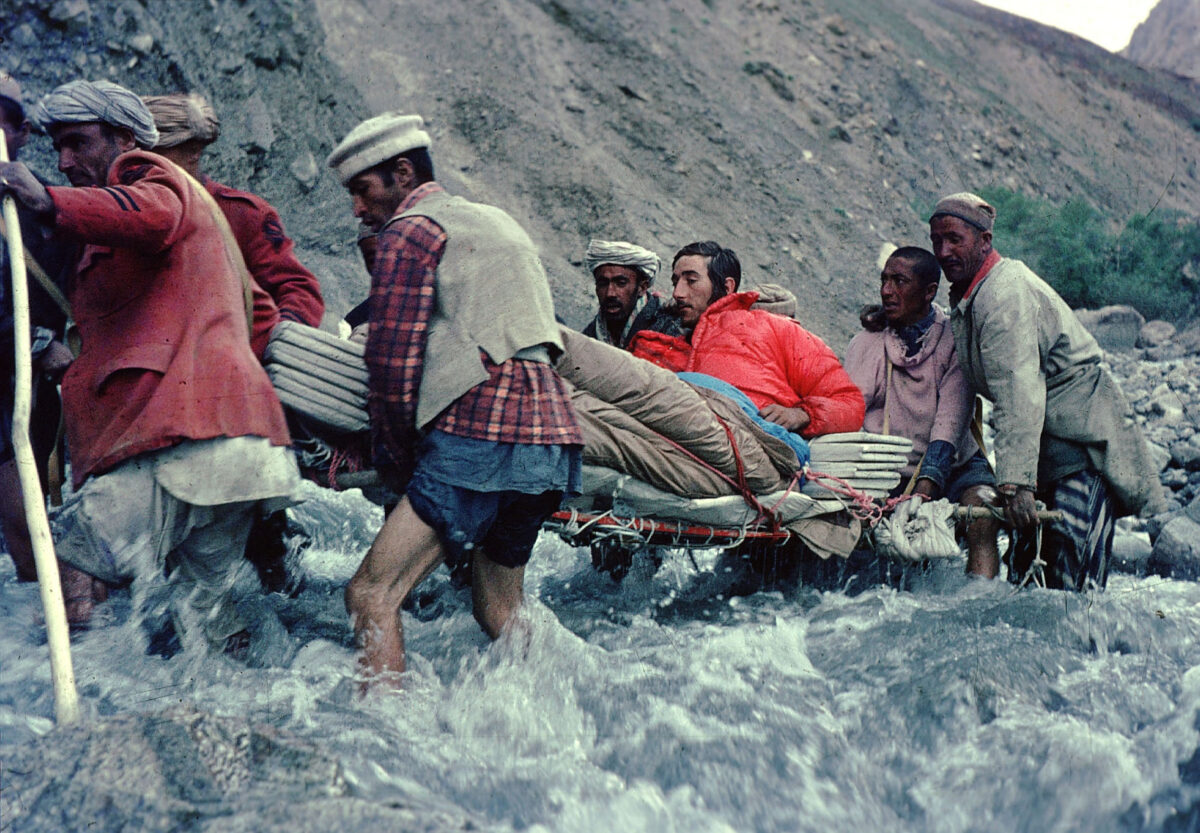
After a successful climb to Kanchenjunga (1991) and an unsuccessful one to Annapurna (1992), Božić climbed K2 in 1993. The expedition’s progress was smooth until shortly before the top of the climb, when the weather worsened. Božić, Viki Grošelj, Carlos Carsolio and Zvonko Požgaj were only able to touch the summit, because standing on it would have been impossible due to high winds. On the way back, the team got lost in the snowstorm, but ultimately managed to get to base four, where they found Boris Sedej and Boštjan Kekec . The latter was in distress, showing symptoms of hypoxia, his condition worsening. Due to the urgency of the situation, Sedej, Požgaj and Božić descended with Kekec through the snowstorm. Soon Kekec was unable to walk and became unresponsive, and the trio pulled him through the deep snow. When this became physically too difficult and when Požgaj began to suffer from frostbite, they decided to leave Kekec to die on the mountain. Božić was affected by snow blindness and barely made it to safety, using only the climbing rope to direct himself back to the base camp.
2000s
Stipe Božić completed the Seven Summits in 2000. The sequence of his climbs was: Mont Blanc (1974), Mount Everest (1979 and 1989), Aconcagua, Mount McKinley, Mount Kosciuszko and Kilimanjaro (all 1996), Mount Vinson (1997), and Elbrus (2000).
In 2003 Božić expressed his desire to climb Mount Tyree, the second highest mountain of Antarctica. This would have made him the first person in the world to climb two highest peaks on each of the seven continents, i.e. to complete both Seven Summits and Seven Second Summits.